Is fentanyl a WMD? Redefining a legal category for political ends
On 15 December 2025, U.S. President Trump signed an executive order designating fentanyl and its precursor chemicals as weapons of mass destruction. The order opens by stating that “Illicit fentanyl is closer to a chemical weapon than a narcotic. Two milligrams, an almost undetectable trace amount equivalent to 10 to 15 grains of table salt, constitutes a lethal dose. Hundreds of thousands of Americans have died from fentanyl overdoses.” The decision arguably appears less an effort to strengthen national and international security and more a strategic political manoeuvre. To understand this assessment, it is worth examining how “weapons of mass destruction” are defined in law, and how far the executive order departs from those definitions.
Under United States federal law, the primary statutory definition of a weapon of mass destruction appears in 18 U.S.C. § 2332a. The statute identifies four categories: destructive devices (such as bombs and grenades), weapons designed to cause death or serious injury through toxic or poisonous chemicals, weapons involving biological agents or toxins, and weapons designed to release dangerous levels of radiation.
Read in context, the definition is embedded within the federal criminal code’s chapter on terrorism. It presupposes intentional weaponisation: the deliberate design or deployment of a substance to cause mass harm. Critically, the use of such a weapon must involve intent to intimidate or coerce a civilian population or influence government policy. Fentanyl trafficking, however devastating in its consequences, does not typically involve this kind of intent. A street-level dealer distributing counterfeit pills is engaged in criminal conduct, but not in an act of terrorism as the statute contemplates it. The international legal framework tells a similar story.
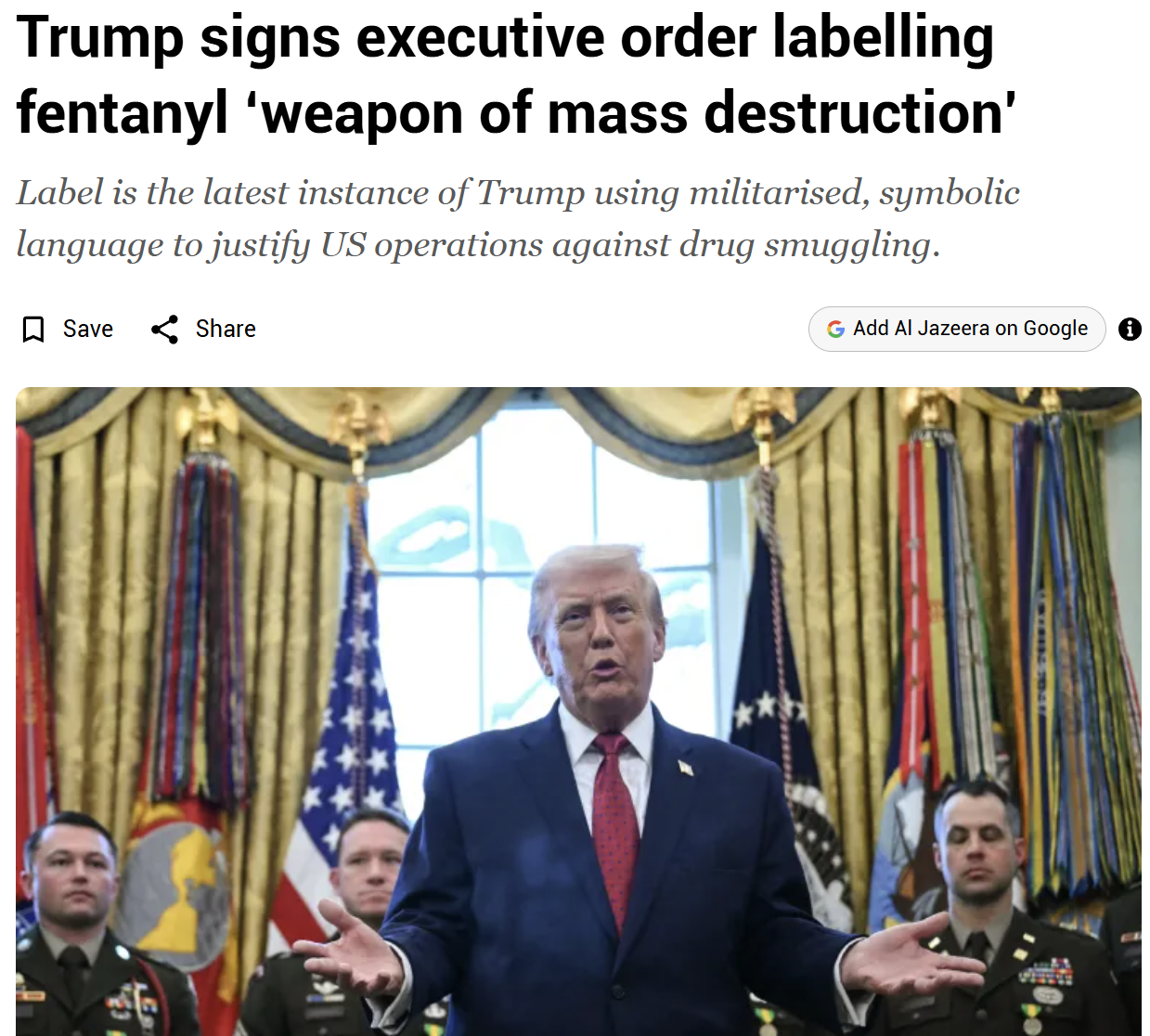
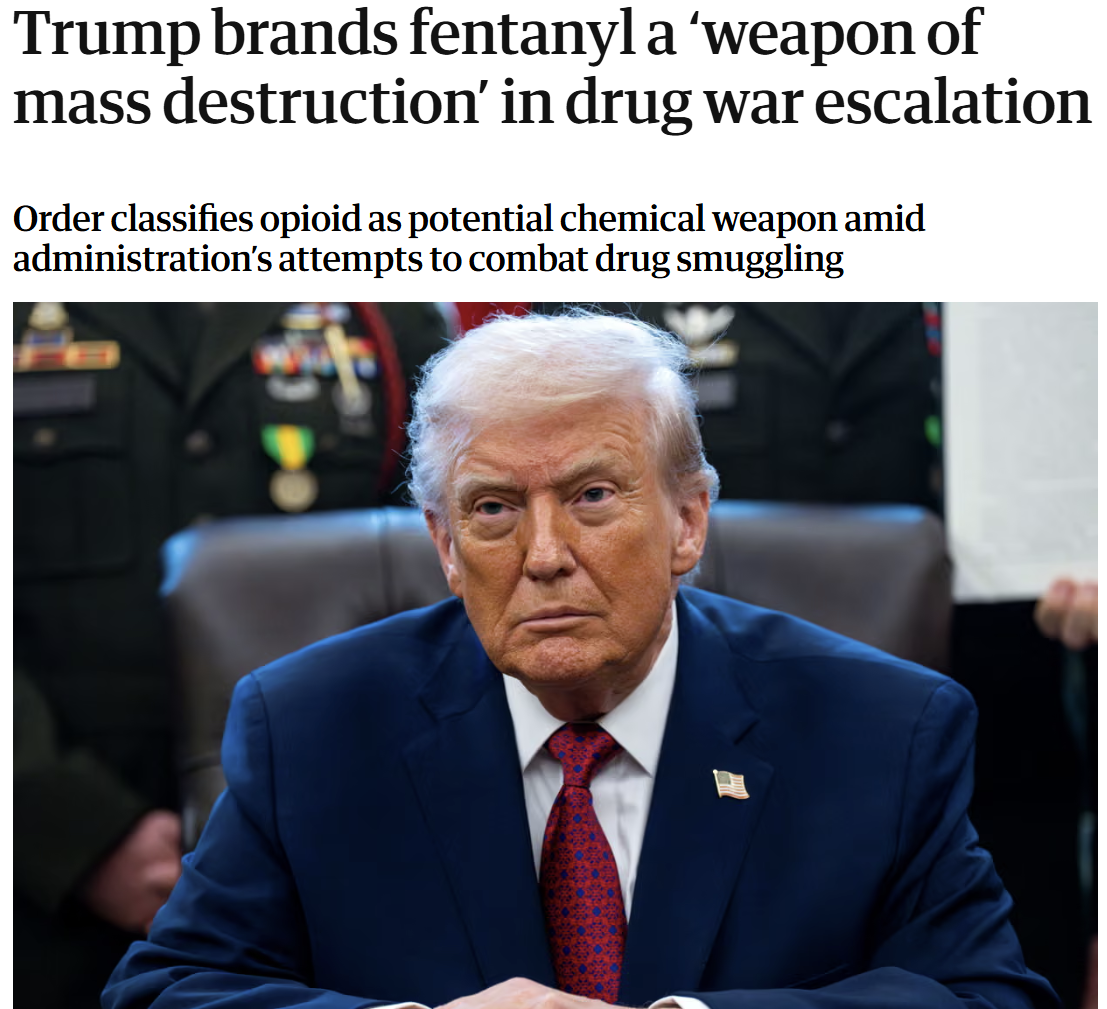
News media screenshots from Al Jazeera and The Guardian.
Fentanyl and the Chemical Weapons Convention: a grey area
The Chemical Weapons Convention (CWC), which aims to eliminate chemical weapons globally by prohibiting their development, production, stockpiling, and use, defines toxic chemicals as substances that can cause death, temporary incapacitation, or permanent harm. Fentanyl clearly meets this toxicological threshold. However, the CWC does not classify substances as chemical weapons based on toxicity alone. The Convention operates on what is known as the general purpose criterion: a chemical is only considered a chemical weapon if it is intended for purposes prohibited by the Convention, namely warfare or hostile use against people.
In other words, purpose determines classification, not only the inherent properties of the substance. If properties alone were considered, we may see narcotics like heroin being classified as chemical weapons merely because they could be weaponised, for example, by introducing them into a watercourse. Yet, the important distinction is that a WMD is akin to a handgun, while fentanyl is the bullet. When paired, they become dangerous. Fentanyl is not listed on any of the three CWC schedules of controlled chemicals . Due to its effective analgesic properties, it is frequently prescribed as a drug to be used in medical settings, for example in surgical procedures or for the treatment of severe, chronic pain. Therefore, it exists in a grey area, primarily regulated as a pharmaceutical product and controlled narcotic rather than as an agent of chemical warfare.
All this is not to say that fentanyl as a CW is not genuinely debatable. In 2002 , Russian use of fentanyl and fentanyl subgroup chemicals during a rescue operation resulted in a high rate of deaths and sparked international controversy. Chechen militants took more than 800 hostages during a performance at Moscow's Melnikov Street Theatre, demanding the withdrawal of Russian troops from Chechnya. After a three-day siege, Russian special forces ended the crisis by releasing a chemical aerosol into the building before storming it. Although the attackers were killed and explosives were neutralised, more than 100 hostages also died, most from exposure to the gas and inadequate medical care.
The Russian government refused to reveal the composition of the aerosol, complicating treatment efforts. In 2012, a study concluded it likely contained fentanyl-related opioids. While Russian authorities insisted that no chemical substances that could fall within the international weapons convention were used, U.S. and international analysts started questioning whether the fentanyl-derived gas violated the CWC, because it caused mass fatalities.
The episode left open a question that would reappear in U.S. policy circles over the following decade. Proposals to bring synthetic opioids more formally within the CWC framework have resurfaced in recent years: in 2019, officials within the Department of Homeland Security were already exploring the possibility of treating fentanyl as a potential WMD, particularly in scenarios involving aerosolisation or deliberate mass exposure. These discussions were largely confined to hypothetical threat modelling rather than formal policy. Nevertheless, they marked an important conceptual shift: fentanyl was no longer being considered solely as a public health threat or illicit commodity, but as a substance that could, under certain conditions, be imagined within a WMD paradigm.
The executive order can thus be read as the formalisation of a line of thinking that had been developing within parts of the security apparatus for several years. It does not amend any statute or create a new legal category, and it primarily reframes fentanyl trafficking within the language of national security and transnational threats. The designation is, in legal terms, largely symbolic.
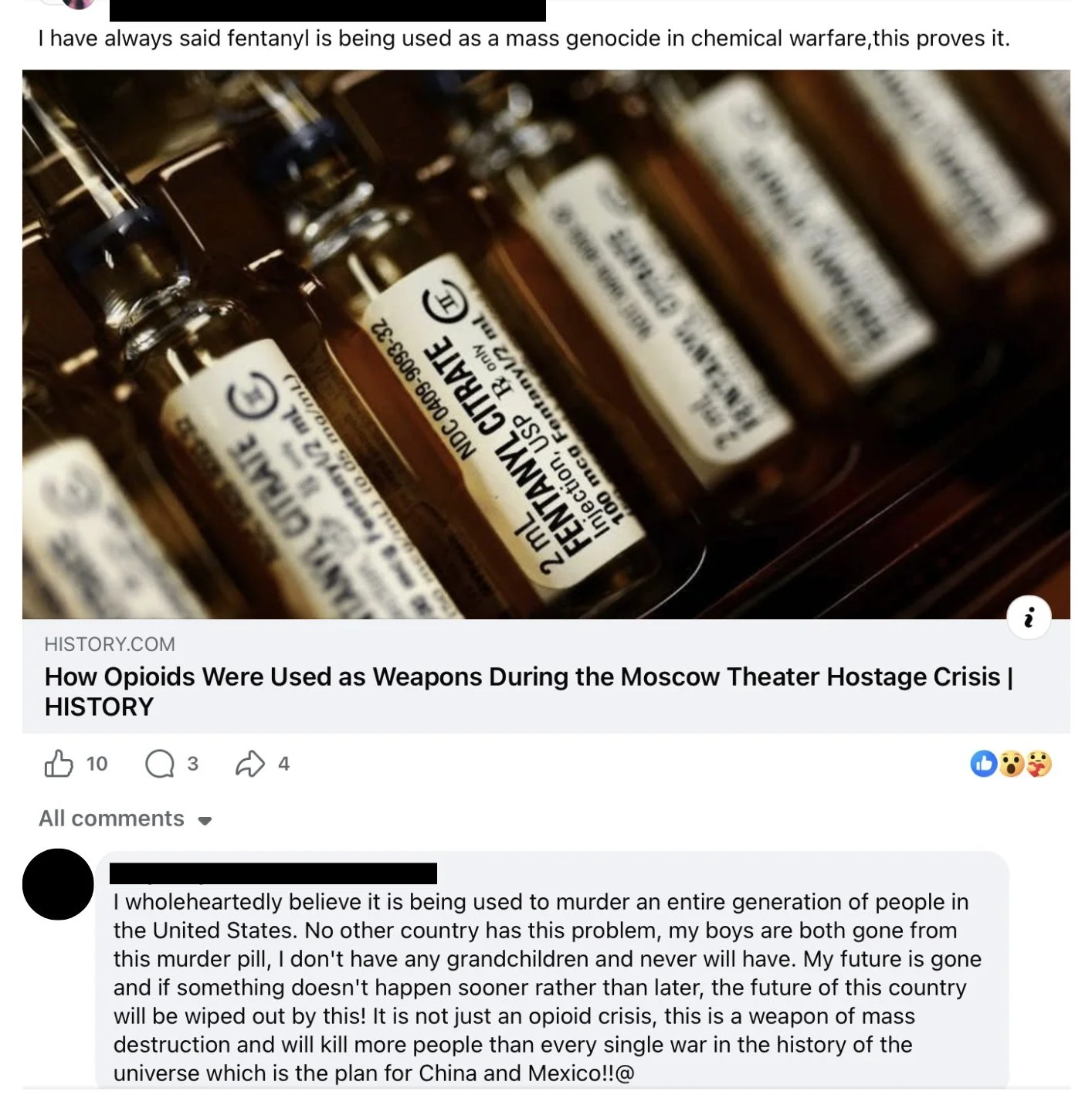
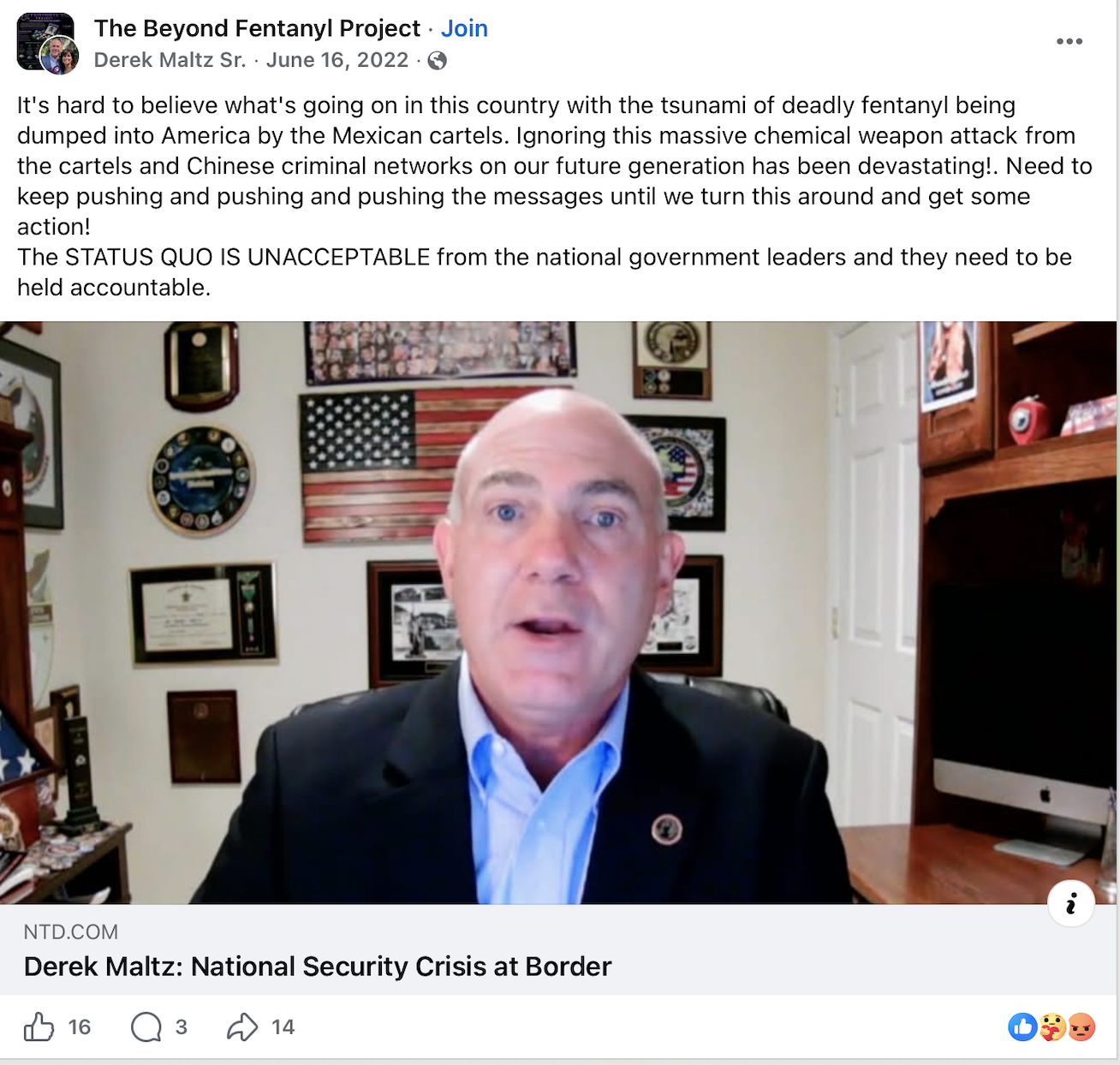
Images from Facebook posts related to the characterisation of fentanyl as a WMD. On the left, a 2024 post of someone identifying the Moscow siege as ‘proof’ that fentanyl is a WMD, including highly pertinent comments. On the right, a 2022 post of former DEA Special Agent in Charge Derek Maltz calling the crisis a “massive chemical weapon attack from the cartels and the Chinese criminal networks”.
Weapons of mass destruction as strategic symbolism
Yet, the symbolism introduces significant real-world implications. By applying the WMD label to a narcotic, the order conflates two fundamentally different kinds of harm: the mass casualties caused by an illicit drug market driven by addiction, criminal enterprise, and inadequate public health responses on the one hand - and the deliberate deployment of weapons designed to kill or incapacitate large populations on the other.
The distinction matters because WMD is not simply a descriptor of lethality. It is a legal and strategic category that carries specific implications: arms control obligations, military response frameworks, international inspection regimes, and threat assessment protocols. When the label is stretched to cover a public health crisis, it risks diluting the operational meaning of WMD for actual chemical, biological, radiological, and nuclear threats - while simultaneously justifying enforcement measures that may be disproportionate to the nature of the problem. The question, then, is not whether fentanyl is dangerous. It is. The question is what kind of danger it represents, and whether the WMD label clarifies or distorts our understanding of it.
One way to understand the broader stakes of this shift is through comparison with earlier episodes in which WMD language was deployed expansively. The most salient example remains the discourse surrounding Iraq in the early 2000s . In that case, claims about weapons of mass destruction rested on a combination of ambiguous intelligence, worst-case scenario reasoning, and a political environment that rewarded certainty over caution. Fragments of evidence were treated as proof of capability, while hostile intent was often presumed rather than established. In practice, the line between possibility and imminence became blurred. The result was a lasting erosion of public trust in official threat assessments.
The comparison with fentanyl should not be overstated. There is no suggestion here of fabricated evidence or covert weapons programmes. The harms associated with fentanyl are concrete and devastating. Yet, the parallel lies in the mechanism of categorisation. In both cases, the language of WMD functions to collapse distinctions that would otherwise matter: between the capacity for harm and an intention to deploy it, and between diffuse social processes and deliberate acts of violence. In both instances, media narratives contributed to reinforcing claims with limited scrutiny. In 2002-2003, major news outlets uncritically amplified administration claims about Iraqi chemical weapons, with reporters publishing front-page stories based on intelligence that was later discredited. Similarly, in the months preceding the December 2025 executive order, reporting on fentanyl seizures frequently relied on a particular form of quantification: the translation of raw quantities into hypothetical death tolls. Headlines would routinely state that a given seizure represented “enough to kill” hundreds of thousands or even millions of people, treating hypothetical death tolls as newsworthy facts while consistently framing a public health crisis through the language of mass destruction.
Such figures travel rapidly across platforms, often reposted as Facebook captions and social media headlines stripped of their original caveats. Their apparent precision grants them an authority that the underlying premises do not support, compounding public misperception at scale and prompting an emotional reaction.
On one hand, such statements are grounded in a straightforward calculation based on an estimated lethal dose. However, this mode of representation rests on a series of assumptions that are rarely made explicit. It presumes uniform potency, ignores variations in individual tolerance, and treats distribution as if it were perfectly efficient and uniformly lethal. Most importantly, it conflates a theoretical upper bound with a plausible real-world outcome. The effect of this framing is cumulative: by repeatedly presenting fentanyl in terms of its maximal lethality, media coverage shifts the registry in which the drug is understood. It becomes conceptually aligned with mass-casualty scenarios, even in the absence of deliberate deployment. By the time the executive order was issued, the conceptual groundwork had already been laid; not just institutionally, as early as 2019, but also discursively through years of narrative building.
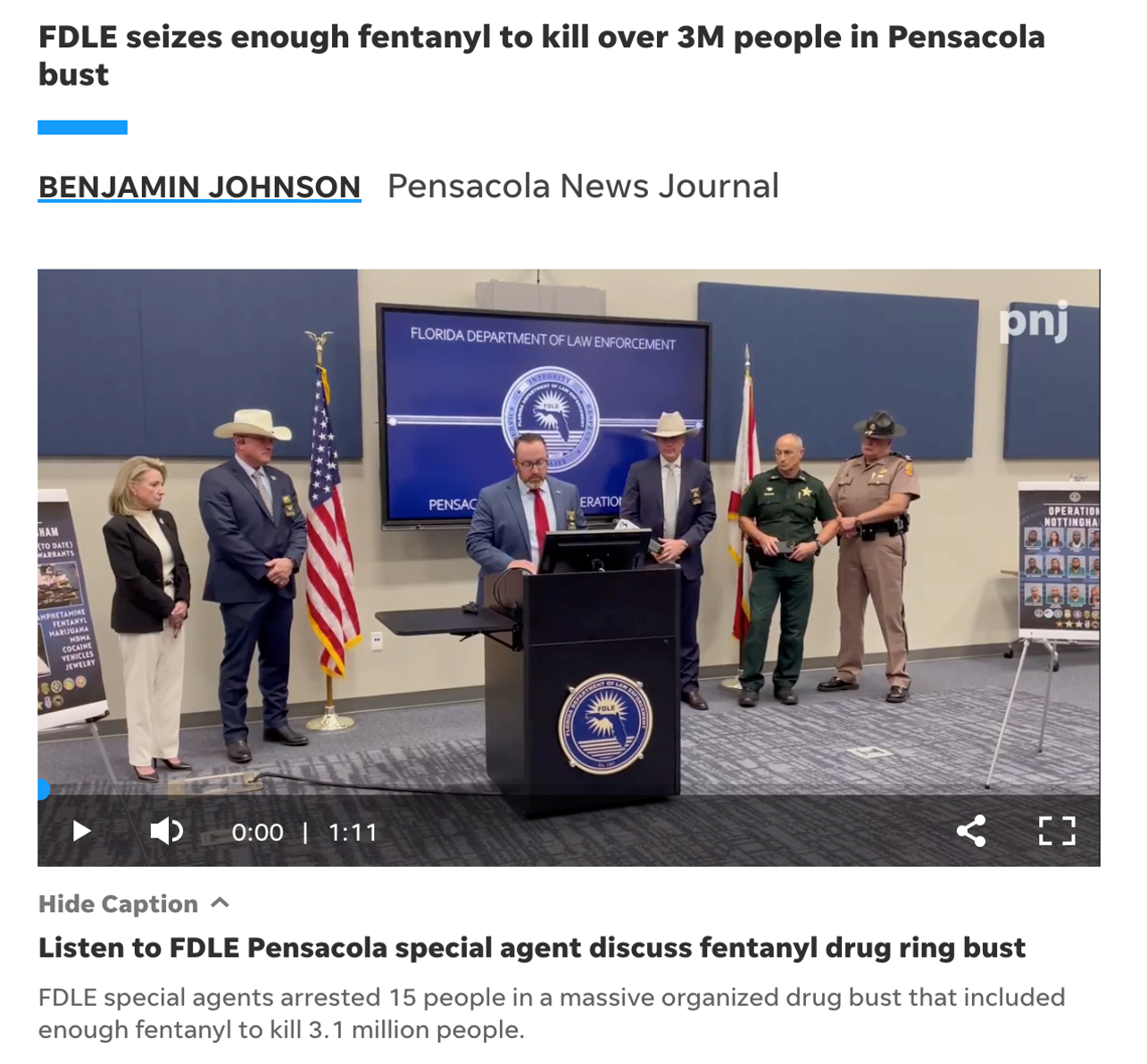

Screenshots from news media reporting and Facebook communities quantifying fentanyl seizures in terms of “enough to kill” a given amount of people.
Public memory, category collapse, and the cost of crying wolf
The subsequent military operations against Venezuela and the administration’s framing of those operations as a counterproliferation response to WMD trafficking represent the logical culmination of this process. JD Vance's commentary on the Venezuela strikes exemplifies this fusion between drug interdiction and weapons enforcement, a portrayal only coherent if one accepts the WMD designation as substantively meaningful.
And yet the public, as the Reddit corpus shows with unusual clarity, did not accept it. Across more than 800 comments spanning six subreddits (from r/Military to r/moderatepolitics, from r/Conservative to r/news), the Iraq analogy emerged rapidly. Cross-ideological consistency suggests that it is almost like a reflex, inscribed in collective political memory so deeply that it requires no analytical construction.



Reddit screenshots related to the designation of fentanyl as a WMD, with commenters alluding to the American invasion of Iraq or explicitly comparing it to the military escalation against Venezuela.
Crucially, though, a significant number of commenters went further, arguing that the current pretext is worse than Iraq - that, at least, in 2003 there was genuine strategic ambiguity over real chemical weapons use. The fentanyl-as-WMD designation, on the other hand, involves the stretching of a definition so exhausted by prior instrumentalisation that one r/Intelligence commenter simply notes that “the designation has no real meaning these days”. In a r/moderatepolitics thread, another user stated: “Back in my days they at least lied about them having actual weapons of mass destruction, instead of making up new ones”.
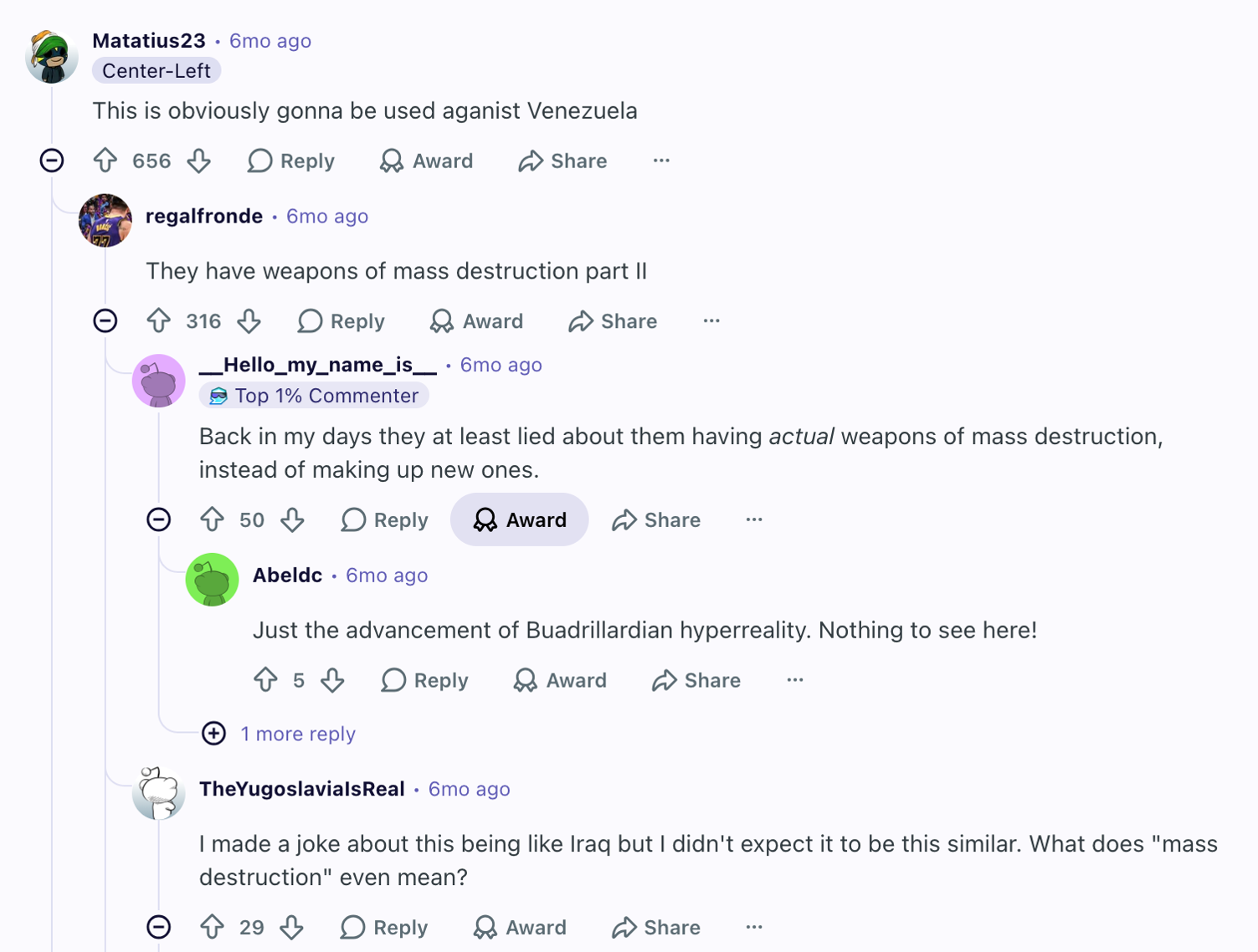
Reddit screenshot related to the designation of fentanyl as a WMD. Beyond comparing Iraq and Venezuela, commenters provocatively inquired about the operational meaning of ‘mass destruction’ and referenced Baudrillard’s theory of hyperreality, seemingly alluding to the blurring between media simulations and political reality.
This is the deepest form of category damage, as it is self-reinforcing: the more the WMD label is stretched to encompass public health crises, the more the public engages in reductio ad absurdum, pointing out that alcohol, tobacco, sugar, cars, and hospital formularies all equally qualify by the administration’s logic. Each iteration further erodes the category’s capacity to function as a credible signal for chemical, biological, radiological and nuclear threats as it was intended to.
This viral, satirical clip from The Daily Show, originally aired in December 2025, represents a stark example of this loss of significance. After drawing parallels between the justifications embraced during the old Iraq War-era and those utilised amid the growing conflict in South America, Jon Stewart provocatively asked “Or is WMD just the new slang like, ‘Yo, bro, Venezuela’s total WMD 6-7 what’s up?’”
The WMD designation also risks flattening complex transnational dynamics into simplified threat models. Consider the case of China: while administration rhetoric positions Chinese precursor chemical exports as evidence of adversarial intent, recent regulatory cooperation tells a more nuanced story. Chinese scheduling of fentanyl analogues in 2019, followed by enhanced precursor controls in 2023, coincided with measurable declines in North American overdose deaths, suggesting that cooperative rather than confrontational approaches may be more effective.
The WMD framing, however, incentivises zero-sum thinking that treats any Chinese involvement in the precursor supply chain as inherently hostile, potentially undermining the regulatory partnerships that have demonstrated concrete results. This binary logic extends beyond China: source countries become 'enablers,' transit routes become 'attack vectors,' and public health interventions become secondary to interdiction and deterrence. The effect is to transform a complex web of economic, regulatory, and health policy challenges into a simplified security threat that privileges military and law enforcement responses over the diplomatic and multilateral approaches.
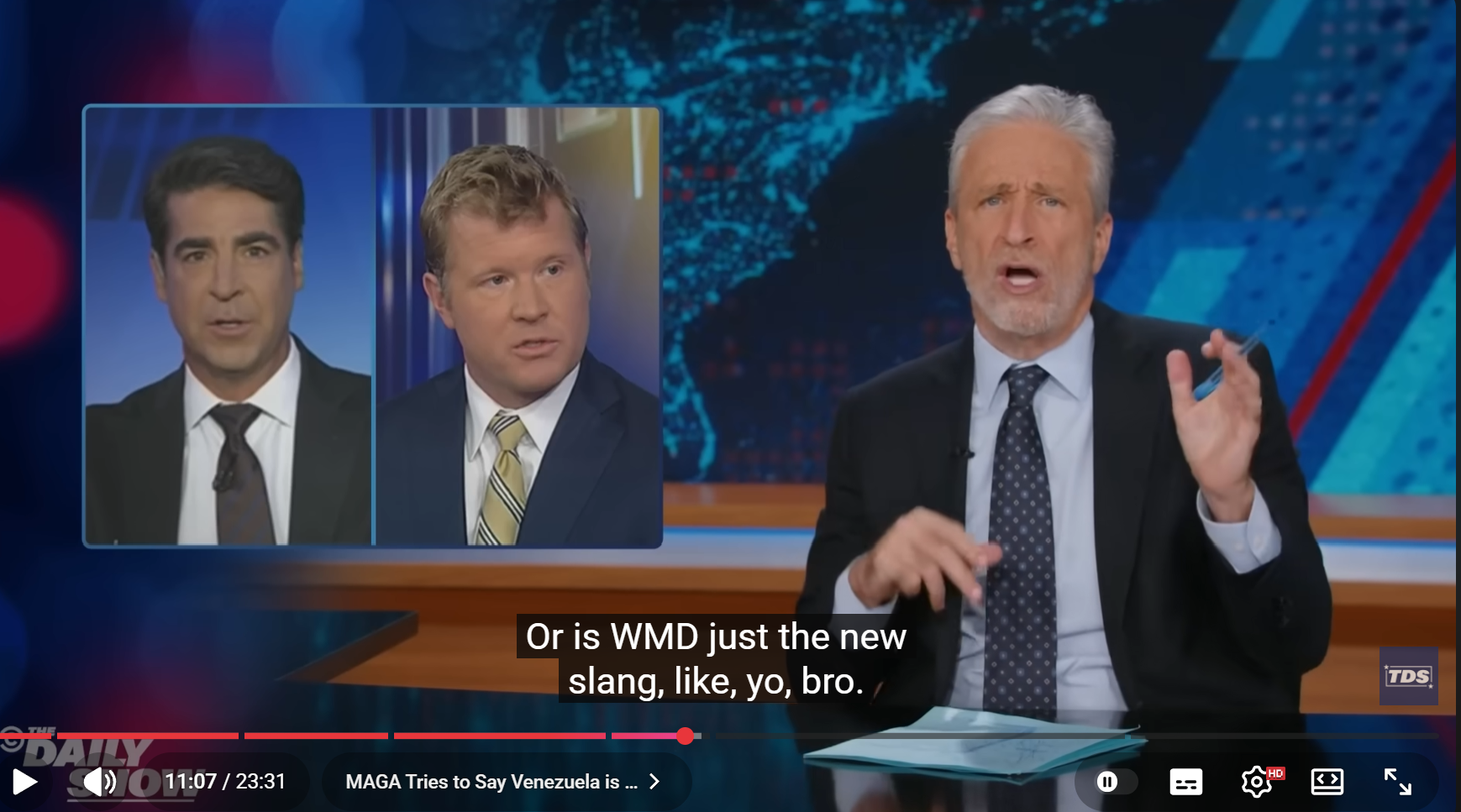
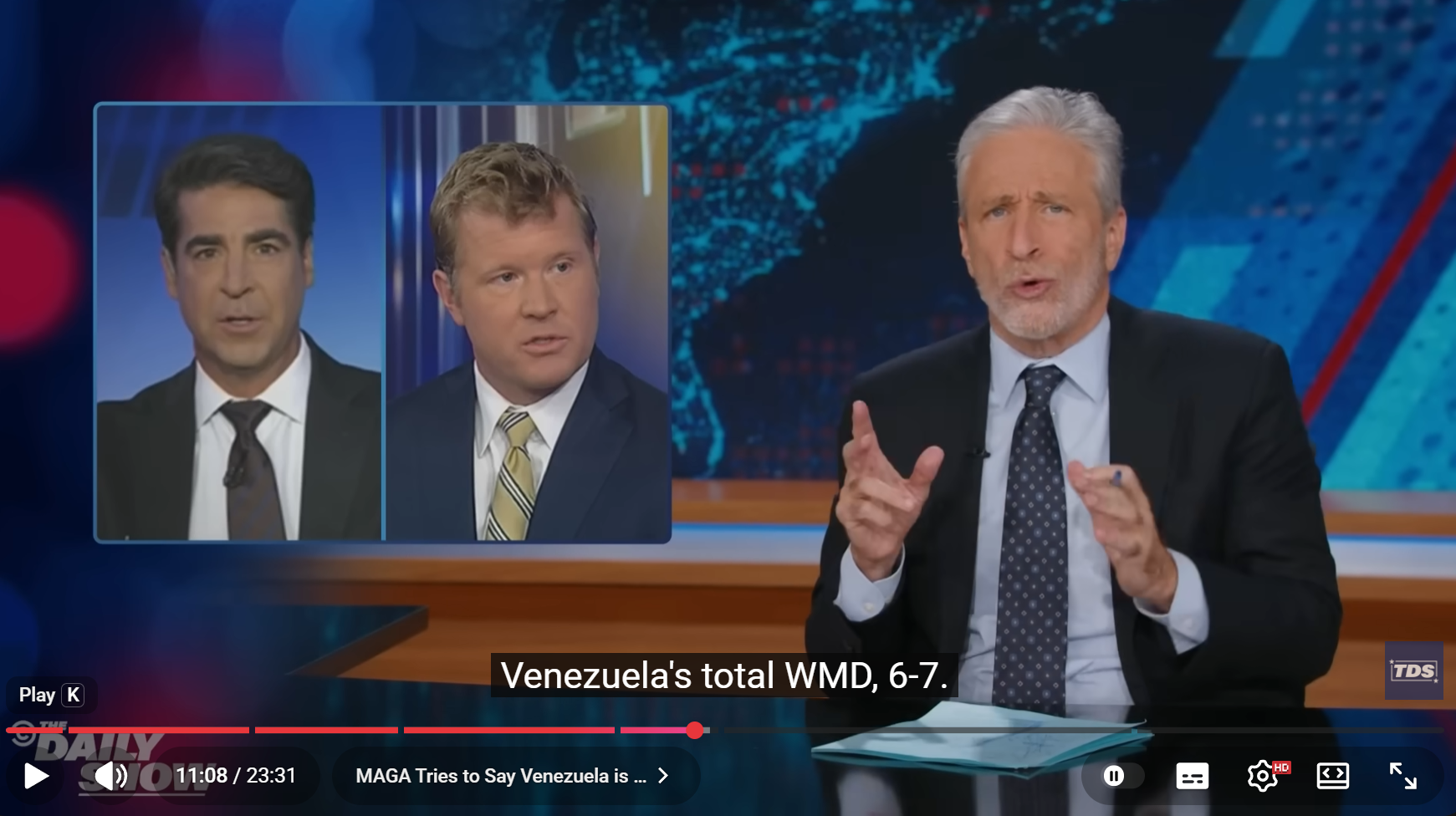
YouTube screenshots from The Daily Show.
Conclusion
The fentanyl-as-WMD designation represents a fundamental categorical error that confuses public health emergencies with acts of warfare. By stretching the WMD framework to encompass addiction-driven criminal markets, the administration not only dilutes the credibility of weapons control designations for genuine threats but also forecloses the cooperative and regulatory avenues that recent evidence suggests are more effective. The widespread public scepticism this has generated, evidenced by immediate comparisons to Iraq's phantom WMDs, creates precisely the kind of category damage that undermines international cooperation. In treating symptoms as if they were weapons, we risk losing sight of both the problem and its solutions, transforming transnational challenges requiring cooperative responses into adversarial confrontations amenable only to force.