Radioactive wasps?! That is not what we found
Have you ever imagined gaining superpowers in some strange, unexpected way? Popular culture has played with that fantasy for decades, and radiation has often been one of its favourite shortcuts. In The Simpsons, “Radioactive Man” turns nuclear exposure into a superhuman origin story. In older science-fiction films like Them!, radiation produces giant ants. In Godzilla, nuclear imagery becomes something darker and more destructive. These stories are fictional, with no grounding in the actual science of radiation, but they have helped shape the way many people picture it: invisible, powerful, and capable of turning ordinary life into something terrifying. When real-world cases emerge, however, the line between fiction and fact can quickly blur, especially on fast-moving social media platforms.
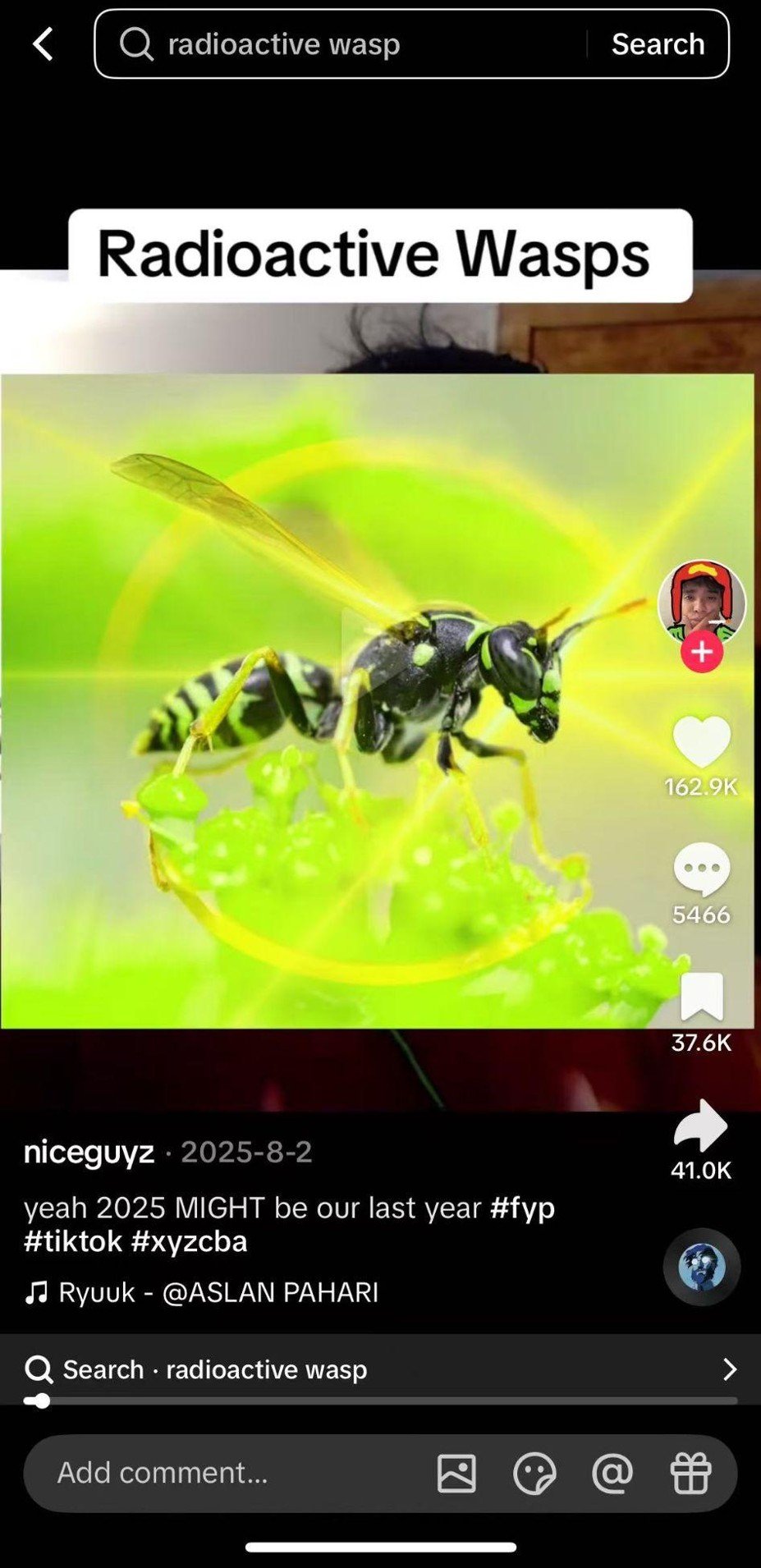
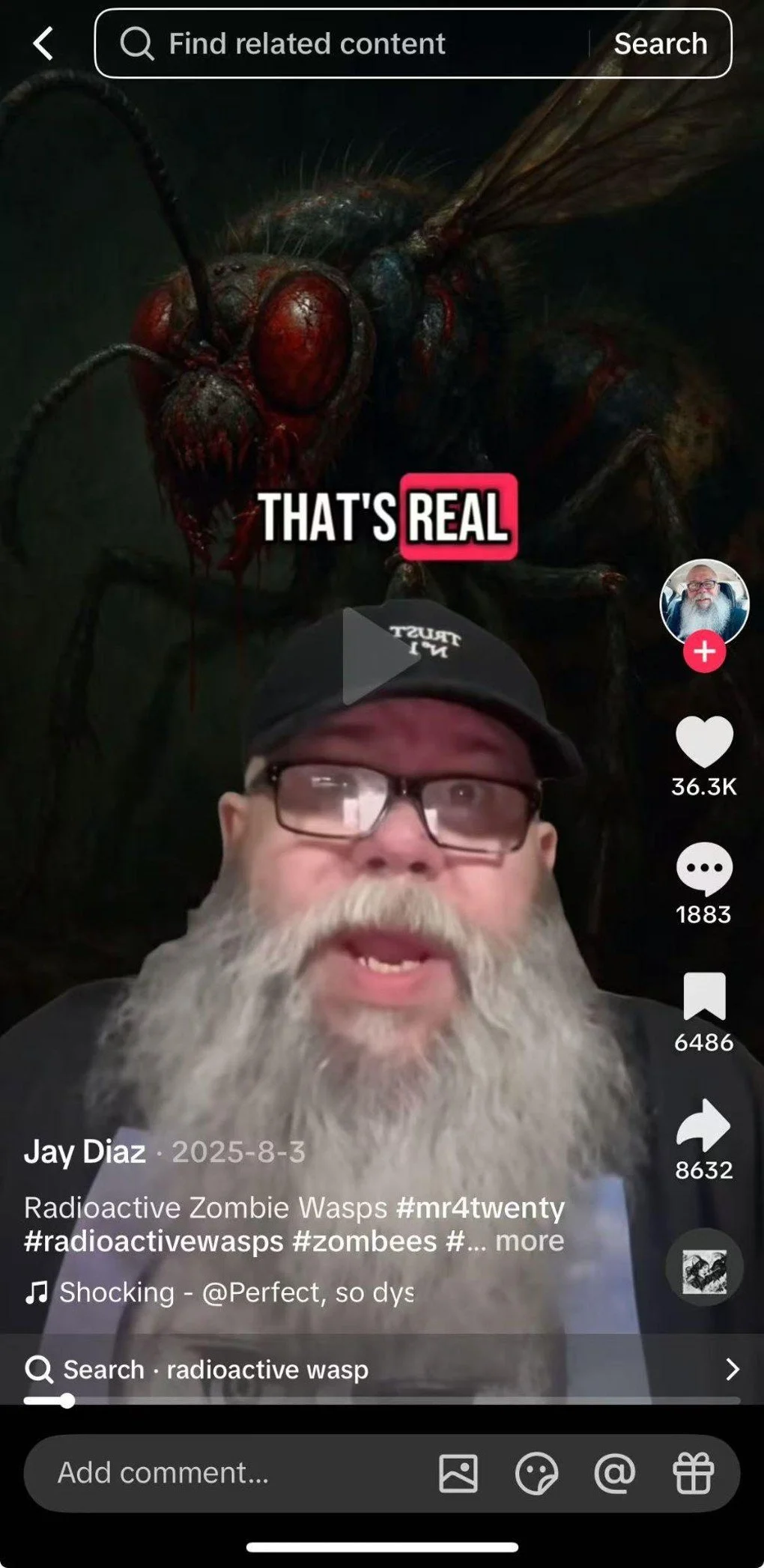
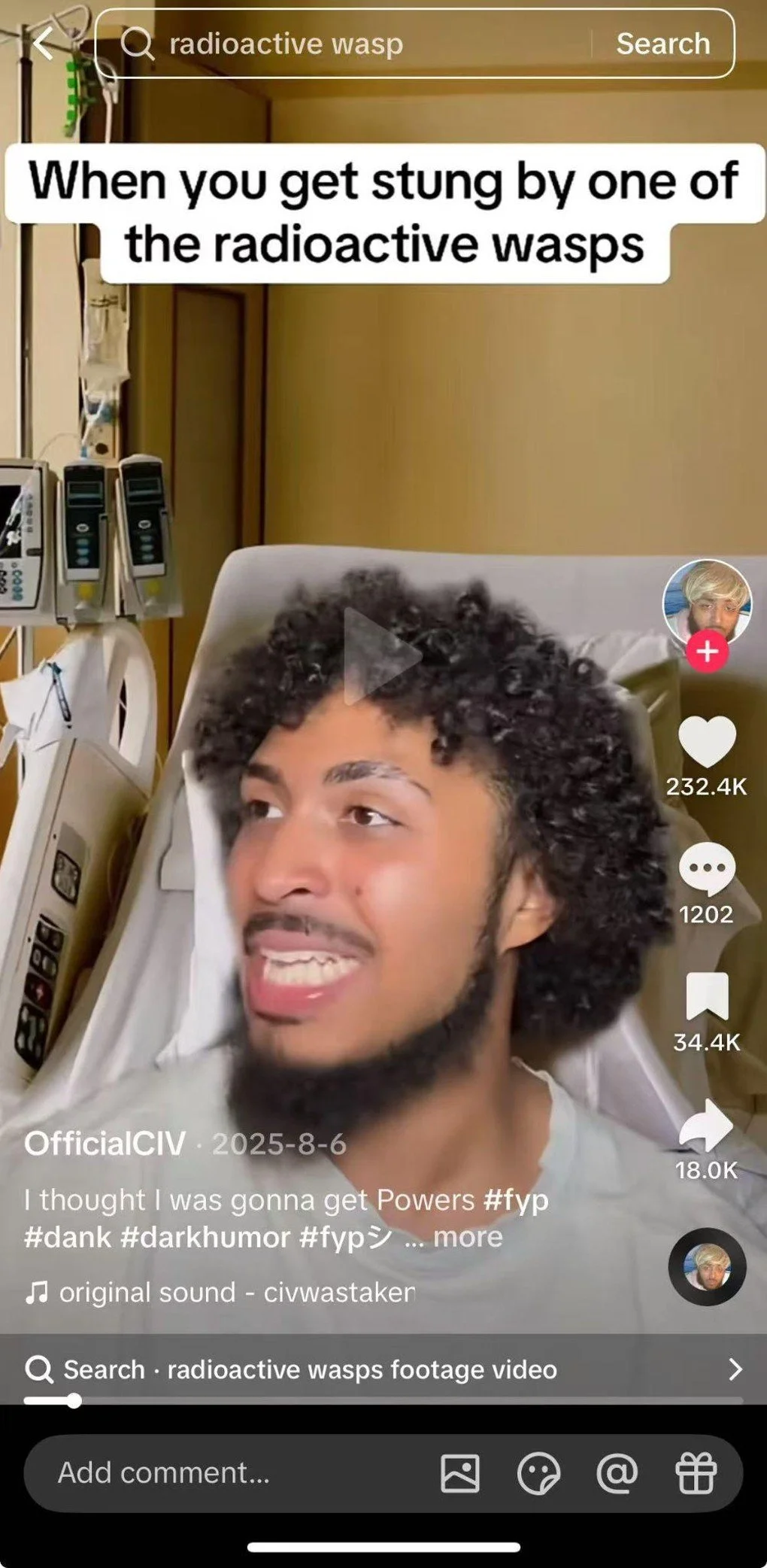
From left to right, screenshot 1: A glowing wasp. Source: TikTok @niceguyz; screenshot 2: "Radioactive Zombie Wasps" reaction video. Source: TikTok @Jay Diaz; screenshot 3: Dark humour skit about getting stung by radioactive wasps. Source: TikTok @OfficialCIV.
Turning a routine finding into a doomsday narrative
In July 2025, four empty wasp nests were discovered at a site in South Carolina, United States. The location was historically used during the Cold War to produce plutonium pits for nuclear weapons. Currently, the site is being used for “environmental cleanup, nuclear materials management, and research and development activities.” As part of these activities, a routine radiological inspection took place – and nests which measured radioactive were discovered near an area where nuclear waste is stored. Unsurprisingly, the investigators determined that the radioactivity came from onsite legacy radioactive contamination, meaning residual radioactive material left from earlier site operations, rather than from any current operational release. Also significant to note: no wasps were present at the time the nests were discovered. All four nests were removed and disposed of as radioactive waste in accordance with established procedures. The Savannah River Site (SRS), which oversees the site, told ABC News that the findings posed no risk to human health or the surrounding environment. The Department of Energy (DOE) report reached the same conclusion.
However, this incident was quickly sensationalised online, particularly on TikTok. Some content creators leaned into exaggerated facial expressions and dramatic tones, reacting with lines like “Are you serious? Radioactive wasps?!” as if actively radioactive wasps had been discovered. This type of framing is built for fear and speculation, not understanding… and it worked. A TikTok by @niceguyz, captioned “yeah 2025 MIGHT be our last year,” gained 162.9 thousand likes, over 5,400 comments, and more than 41,000 reposts. Other creators took the claims even further with nothing to back them up, confidently saying that a sting would make you no longer be yourself or even die. A few turned the story into a fiction drama: a doctor tells a “sting victim” that they have “super cancer” and only ten days left to live. This dramatisation pushes audiences to think about extreme illness, making a fictional danger feel connected to a real event, even though the scenario has no basis in the reported evidence.
Most of these videos also came with edited images of wasps glowing green, which made the whole thing look more alarming than it was. In reality, we do not even know what a “radioactive animal” would look like. The idea of green, luminous creatures comes from movies, not science. Even in well-documented cases in which some animals accumulated radioactive contamination, none glowed or gained any visible “radioactive” appearance. Their presence was identified only through radiological instruments.
The comments under these videos further reveal how misinformation often grows through exaggeration or distortion, and stirs unnecessary fear. Since the story told by these content creators had already become detached from real details, facts were also lost in the comment sections. Some users responded with end-of-world humour, repeated misleading phrases (including “radioactive wasps”), and even introduced other false news about “nuclear shocks.” As a result, the incident focus quickly shifted from a limited legacy-contamination issue to an imagined threat involving dangerous insects. It is further noteworthy that factual and measured reporting from official media accounts was also available on the platform – but attracted far less attention.
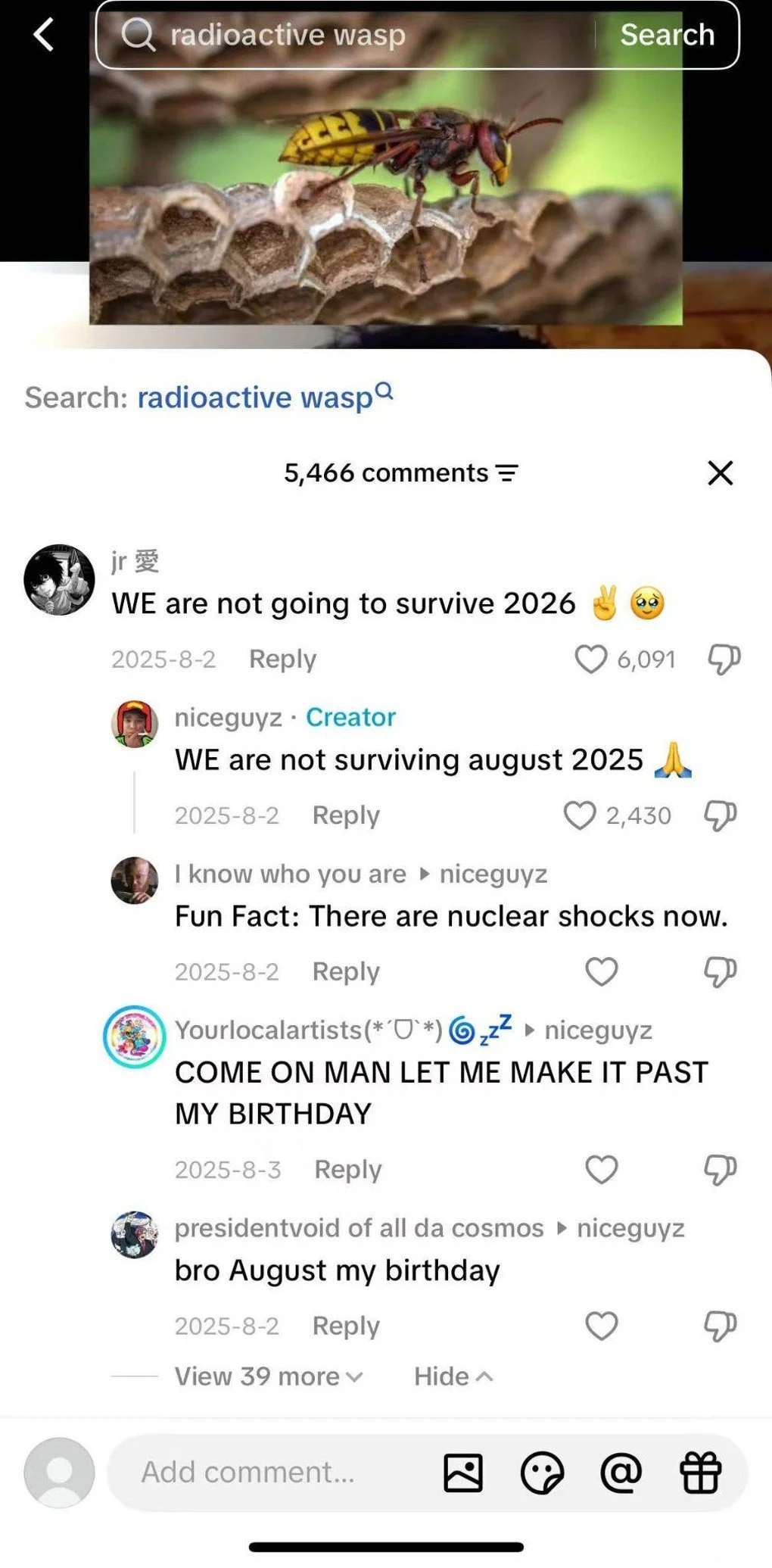
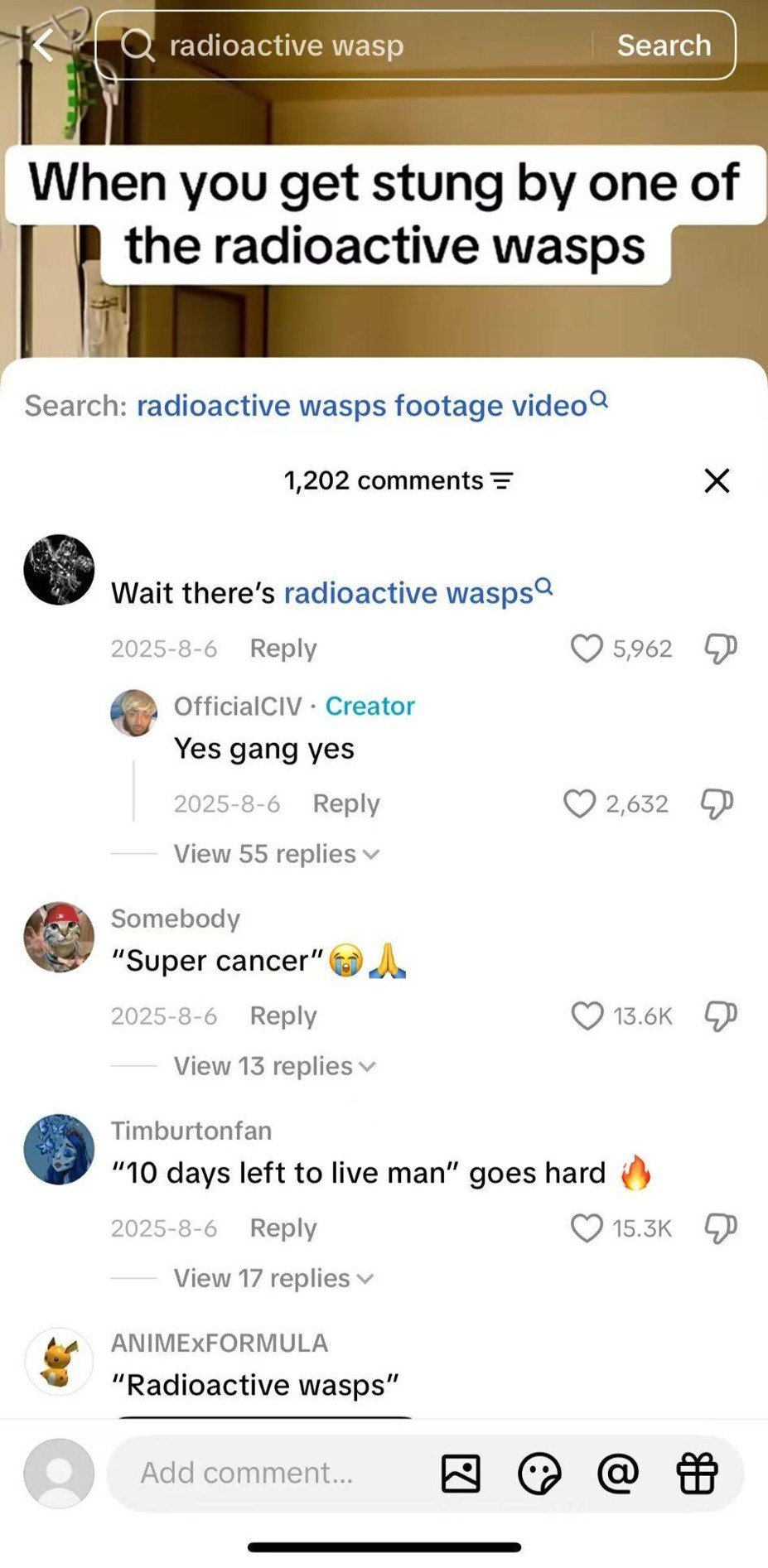
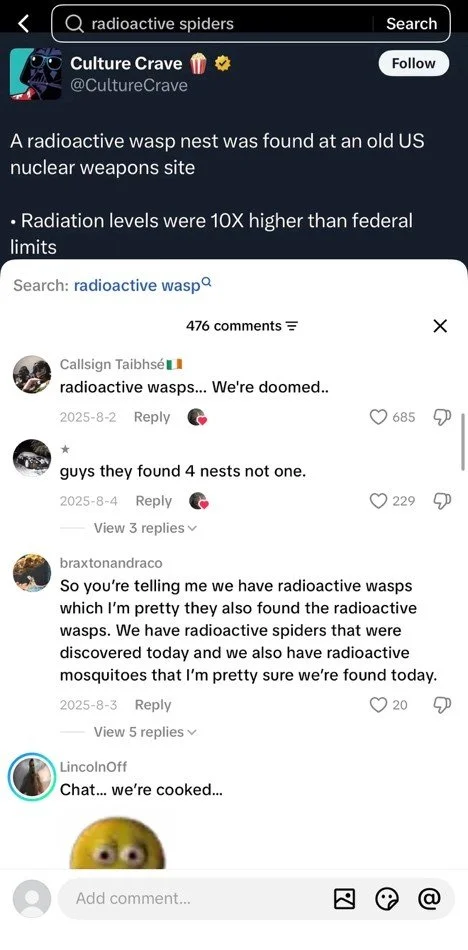
Screenshots of comment sections. Source: TikTok @niceguyz; @OfficialCIV; @GD2ndAccount.
Separating radiation fact from fiction
To move beyond the fear-driven language on social media, it is worth returning to the scientific facts. Radiation is not only associated with nuclear accidents or weapons. Low-level radiation exposure is a normal part of everyday life. We are constantly exposed to natural background radiation from the environment, including cosmic radiation, soil, rocks, and even some of the food we eat. Many natural materials contain tiny amounts of radioactive elements. Scientists call these naturally occurring radioactive materials (NORM). The human body itself is also slightly radioactive due to naturally occurring isotopes.
Radioactive sources are widely used for beneficial purposes, particularly in medicine. Doctors use controlled radiation exposure in cancer treatment, diagnostic imaging, and technologies such as Gamma Knife units to target tumours. In some cases, radiation is also used in agriculture. For example, it can help plant breeders develop improved crop varieties. Therefore, the word “radioactive” should not automatically be read as “dangerous.” The risks depend on how much radiation is involved and how it is delivered, and whether exposure is external or internal.
This does not mean radioactive contamination carries no risk. Historically, there have been cases of animals affected by radioactive contamination, including in Chernobyl, Fukushima, Three Mile Island, and nuclear weapons test sites. These cases usually involve environmental contamination, food-chain transfer, along with long-term ecological exposure. For example, bird populations on average declined as background radiation levels increased, and some studies have reported abnormalities in barn swallows and pale grass blue butterflies. Another finding shows that, wild Japanese macaques carried high levels of radioactive caesium in their leg muscles, likely from eating foods that absorb radioactive material from the ground.
The wasp nest case does not fit that pattern. The reported level exceeded surface-contamination limits, but it referred to contamination on the nest itself, not radiation dose to people. According to the SRS, the nests gave off less than 1% of the natural background radiation people receive each day. Given that there were no wasps found, “radioactive wasps” flying around or spreading radioactive material through the surrounding environment were never a realistic concern.
Helpfully, the South Carolina Forestry Commission has further explained that it is not unusual for animals to carry trace radioactive contamination at sites with a radiological history, and emphasised that the risk to humans remains extremely low. Even if insects were contaminated, they would not pose a danger through casual contact or stings. Meaningful harm would require ingestion or direct entry of radioactive material into the body, which would involve consuming large amounts. Moreover, a statement released by the Savannah River Mission Completion, which oversees the site, wasps typically fly only a few hundred yards from their nests, and the nests were located well within the boundaries of the Savannah River Site. The area is controlled and not accessible to the general public, making exposure to people outside the site highly unlikely.
The official report from the Department of Energy did not specify the exact pathway of contamination, but a plausible explanation can be derived from the way that wasps build their nests. Wasps chew and digest wood to construct nests. If that wood came from trees growing in soil affected by legacy contamination, it could contain small amounts of radioactive substances absorbed through the roots. As wasps collect and combine that material, radioactive substances such as strontium-90 and caesium-137, which can remain in the environment for many years, could end up in the nest.
Why the scary version takes off
Radiological and nuclear disinformation has become a growing problem in recent years, partly because of the unique nature of these threats. Radiation cannot be seen, smelled, or felt, and many of the terms used to describe it, such as ‘exposure,’ ‘dose,’ and ‘radioactive material,’ are not well understood outside specialist settings. For many people, nuclear weapons remain the most familiar reference point, although they might not know what materials are involved, or under what conditions those materials actually pose risks to human health. So, when a post says “radioactive wasps,” people are not only reacting to a scientific term. They are reacting to a word that already carries images of nuclear weapons, explosions, accidents and contamination.
A lack of sustained public education further shapes this problem. Without accessible and accurate explanations, nuclear issues, especially those related to nuclear weapons, are often associated primarily with fear and uncertainty rather than with scientific or regulatory context. This creates a general sense of anxiety that can be easily triggered by new information, even when the actual risk is minimal.
Risk-perception research also helps explain why the non-scientific, scarier, version feels more believable. People often see nuclear power and nuclear waste as riskier than experts do, while experts tend to rate medical or natural sources of radiation differently. At the same time, people are familiar with powerful historical narratives, such as victims affected by nuclear testing and the hibakusha of Hiroshima and Nagasaki. These real and deeply tragic experiences shape public understanding of nuclear harm, even when they are disconnected from contemporary, low-level, or tightly controlled nuclear-related incidents.
Public trust is also shaped by government failures to promptly acknowledge and respond to the harms caused by nuclear testing in affected communities, as well as by poor risk communication after some nuclear power accidents. In many cases, affected communities were not adequately supported, leaving long-term grievances unresolved. As a result, when new nuclear-related incidents are reported, some people fear that similar failures of accountability or protection could occur again.
An ideal scenario for clickbait amplification
If fear and perception made the scary version feel believable, social media turned that believability into reach. Online platforms favour stories that can be understood quickly and provoke an immediate emotional reaction. A careful explanation of this case would need to distinguish surface contamination from actual radiation exposure, as well as determine whether there was any realistic pathway for harm. By contrast, the viral version did not need that context. “Radioactive wasps” offered a simple image: strange, alarming, and easy to imagine. Many posts also used high-arousal emotional cues, such as fear, shock, urgency, or end-of-world humour. Once that simplified and the misleading story began circulating, the likes, shares, and views made it seem more credible.
The wording used in some posts and videos also pushed the story into a more sensational and misleading frame. For example, some headlines referred to “radioactive wasps” rather than “radioactive wasp nests,” described the location simply as a “nuclear site” or incorrectly called it a “nuclear plant” rather than specifying that it was a former facility for plutonium production and is now used for cleanup. Such framing choices function as clickbait, designed to attract greater attention. A more eye-catching version of the story is more likely to get clicks, and those clicks can turn into shares, comments, and repetition. That attention often comes at the cost of context. By leaving out key details, clickbait can give audiences the wrong impression of what happened. Thus, they also shape what people think the story is about. Over time, the repeated misleading version can become the one people remember.
Repeated misinformation is easier to remember when it draws on symbols people already recognise. Popular media often turns science into symbols that feel scientific but are detached from how science actually works. In fiction and online imagery, “radioactive” often suggests glowing bodies, mutation, or living things changed into threats. That gives content creators a ready-made symbol to use, whether through a few words, a thumbnail, or a dramatic image. It also gives audiences a familiar story to complete for themselves.
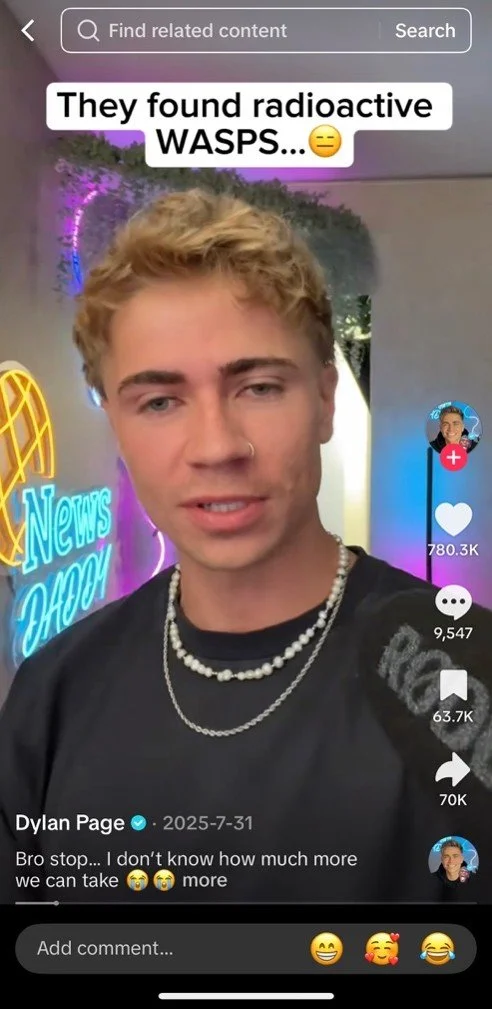
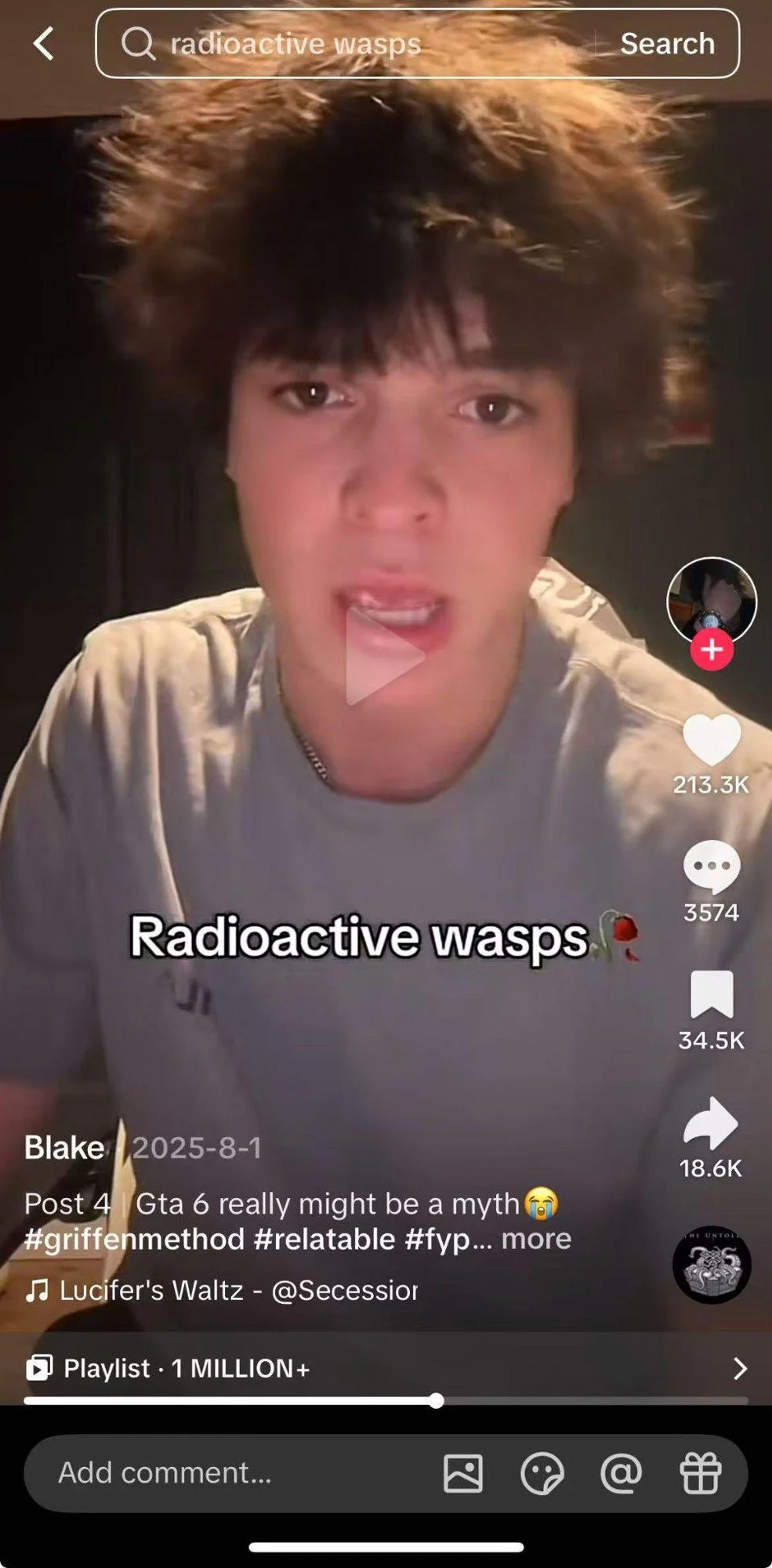
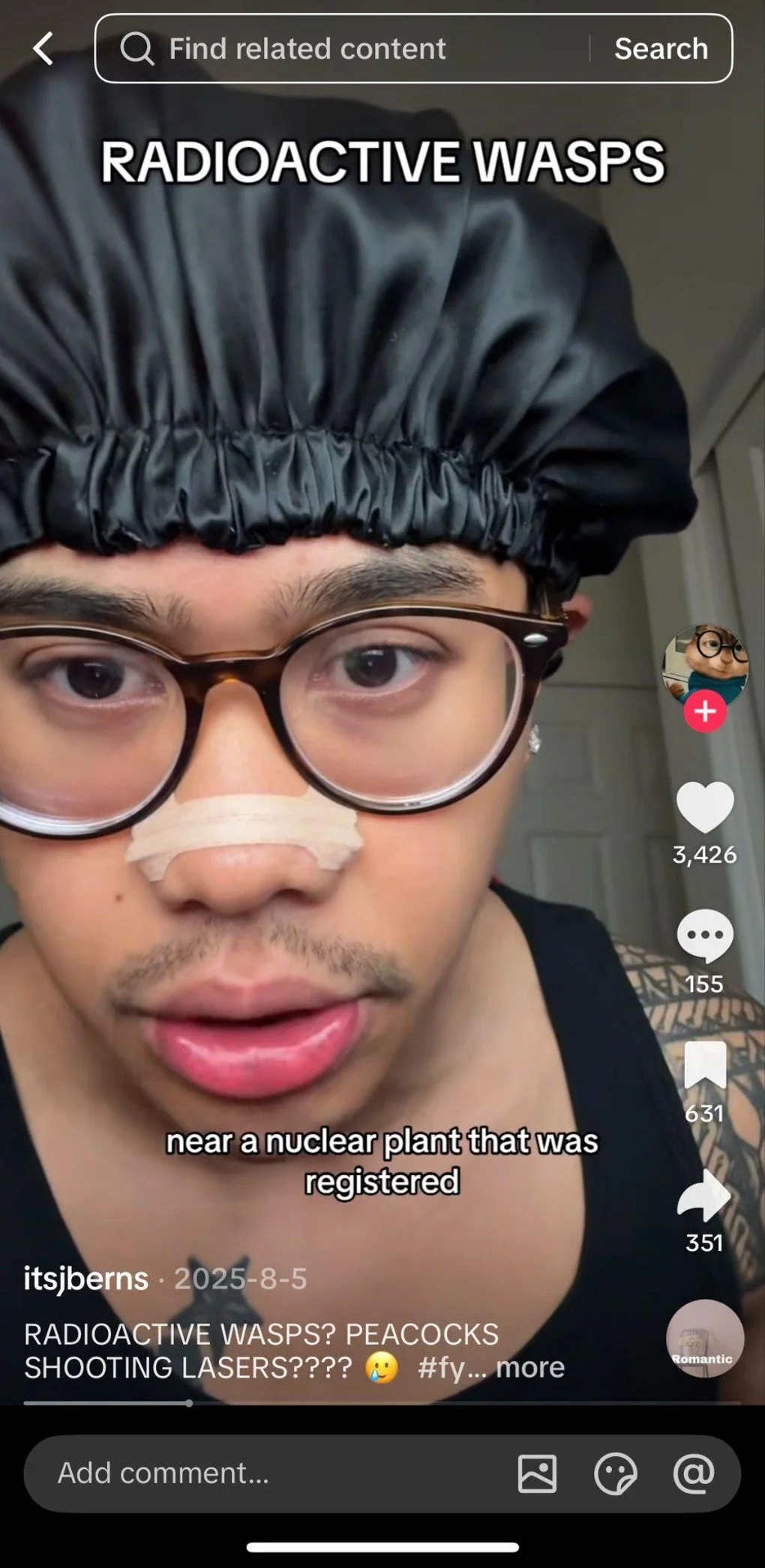
From left to right, screenshots 1 and 2 show "radioactive wasps" being used as a shared trending topic/hook across different TikTok creators; screenshot 3 shows the spoken narration is “nuclear plant.” Source: TikTok @Dylan Page; @Blake; @itsjberns.
Recommendations
So, what lessons can we draw from this case? If you scrolled down and skipped the explanation, please at least leave with this knowledge:
Communication. As the watchdog group Savannah River Site Watch noted, the US DOE could have provided more detail in its report, which might have reduced public concern. This reflects a broader problem of insufficient transparency, which leaves space for speculation about missing details. Another tendency is that official reports are often written from an expert’s point of view, without enough consideration for how the general public would interpret technical language, or how much confusion and distrust that could cause. Reassuring the people and earning trust requires explaining what a finding means for their safety in plain language, with a balanced level of detail. If official reports are brief or unclear, social media fills the space with jokes and exaggerated claims that people can easily follow. Accordingly, we should consider how we can create more careful training in science communication for relevant officials – particularly audience awareness.
Accountability. Entertainment-driven framing in radiation-related stories can lead to widespread misunderstanding. For example, when the contaminated wasp nest incident was framed with clickbait wording it attracted attention, but it also changed the meaning of the incident. When content like this goes viral, algorithms push it to more people, amplifying the wrong framing even further. Part of the reason this keeps happening is that most platforms currently reward content based on engagement, without considering accuracy. Under this mechanism, it is not practical to rely only on creators’ goodwill, since some content creators have little incentive to care whether a post is accurate, as long as it gets high engagement and gets them paid. Moreover, platforms may wish to consider their own social profile. Allowing misleading content to circulate might bring short-term engagement, but over time it damages credibility. A platform seen as a reliable source of information can use that reputation to attract users and advertisers who care about accuracy. Some platforms already have misinformation policies, but enforcement is often too slow for viral scares that spread within hours. Therefore, they should go further by creating stronger incentives for accuracy and introducing real penalties for spreading pseudoscience or trivialising public safety and security issues for entertainment. For example, they could reduce recommendation or monetisation for repeated misleading claims.
Public science education. Many people have some pop-culture associations with radiation, which are usually not grounded in science. Educational efforts, whether in schools or in other settings, should therefore focus on a few practical basics: what contamination means, how exposure happens, and why risk depends on amount, location, and pathway. These ideas can be explained in plain language without relying on too many technical terms or numbers. For instance, posters. or indeed. media posts, showing everyday sources of radiation, such as bananas. We do not all need to become radiation experts – but we can work to raise general awareness that the presence of radioactive material does not automatically mean that someone is in danger. These ideas can be explained in schools, museums, public information campaigns, you name it.
Prevent amplification. EVIDENCE brings this one up a lot, but it is really important to remember that audiences are active participants in the information ecosystem, and they have a role in slowing down inaccurate information. Even someone with real radiation expertise might find a headline like “glowing mutated wasps” funny enough to share with friends. However, sharing it, even as a joke, can be taken out of context. If you know the real story, the better move is to share it along with a quick note on what actually happened. If you do not have that background but a story catches your attention, pause before sharing. Ask what exactly was found, where, whether anyone was exposed, and whether the post links to a reliable source. If you are not able to provide these answers based on the post you came across, check against official media outlets and government statements before sharing. If you spot a version you know is false, reporting it and leaving a factual comment can help the next person who sees it.