A House of dynamite: nuclear scenario movie review
This holiday season, like many others, I had the opportunity to spend some quality time with friends and family. However, maybe you are not like me and “Nuclear Security Policy” is not your subject of study. In my case, they all lined up to ask questions about the latest movie in the Nuclear War thriller category, A House of Dynamite. This movie takes inspiration from the best-selling book by Annie Jacobson, Nuclear War a Scenario. Both the book and the movie ask their audience to suspend their disbelieve for how or why a nuclear weapon is fired at the continental United States without clear provocation or motive. Instead, they want the audience to follow the “what if” and come to terms with the potential decision a commander in chief must make.
Warning, minor spoilers ahead!
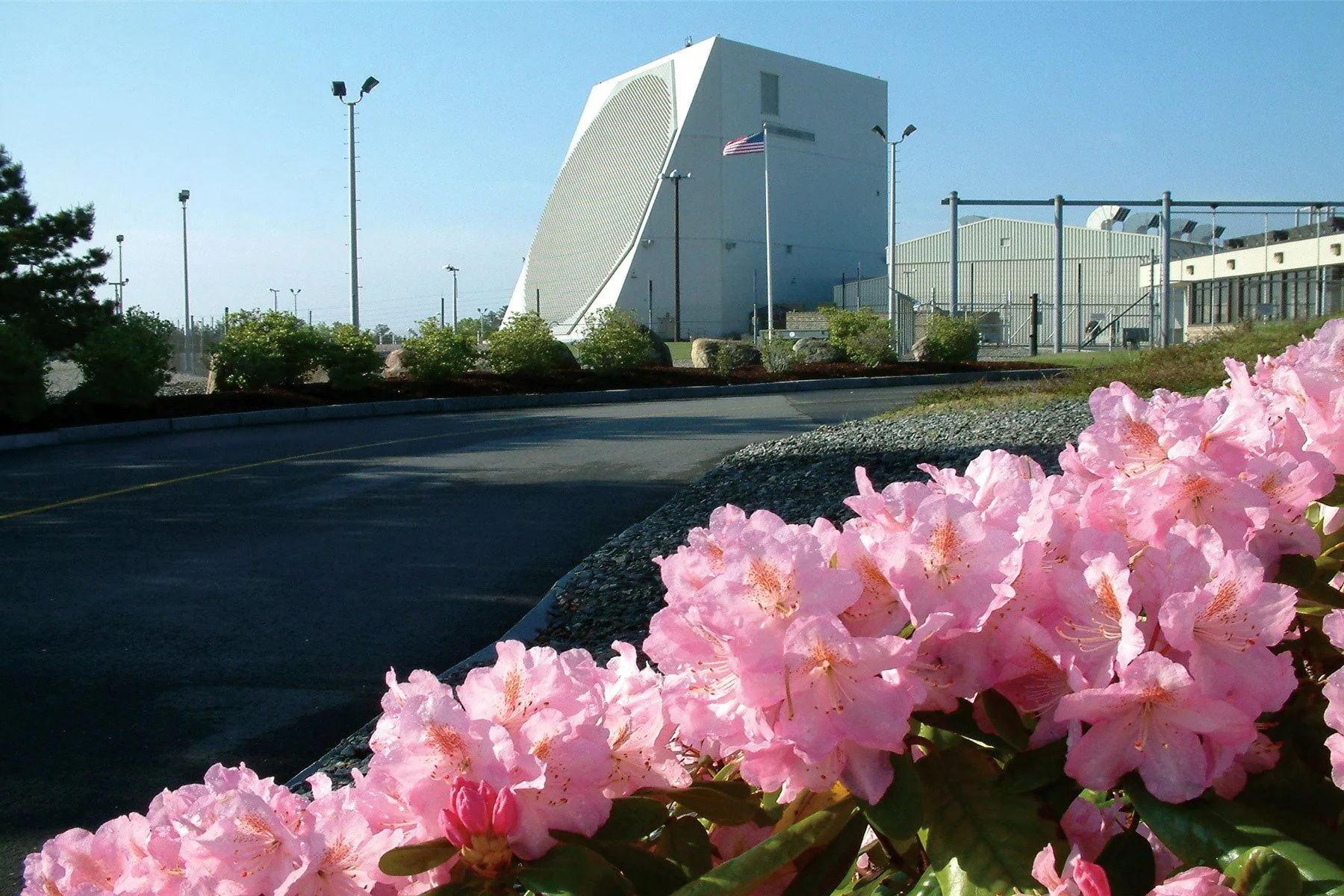
Early Warning Radar (EWR) Based out of Clear AFS Alaska (missile warning for SLBMs, and ICBMs over North America). Image source U.S. Air Force.
What they got right
A House of Dynamite has some elements of realism and can be instructive if, as noted by others, “the attack scenario itself”, were slightly different. The movie focuses on the highest branches of the National Security decision tree. Within minutes of learning of the incoming threat, leadership is on a conference call. This is very realistic. In most time sensitive situations, a secure teleconference should be expected. The members that are included on the main conference call are realistic. Although, possibly simply to avoid making the scenes too crowded, there are some notable members missing including the Secretary of State, CIA and DIA representatives. The actions taken by the characters are, in my view, indicative of a much larger attack; but they are still somewhat realistic. Another realistic inclusion was that of the FEMA characters very rapid evacuation to Raven Rock on busses packed with other government employees. This inclusion was something I was impressed by. In my view the most dynamic part of the U.S. response to a potential nuclear attack is the Continuity of Operations (COOP) and Continuity of Government (COG) pre-planning. That subject is a hugely complex topic, and if you’d like to know more I recommend, the book Raven Rock, by Garrett Graff. It goes into very intricate detail on the history of the practices and procedures the U.S. government has taken to protect itself during potential nuclear war. In a large-scale attack thousands of people in Washington and around the U.S. are put on helicopters busses and planes. The movie does exclude what may happen to high-ranking members of the Senate, House of Representative and the Supreme court Justices. Much like the FEMA characters and the Secretary of Defence they too, are brought to locations like Raven Rock, Mount Weather, NORAD, Minot AFB and other undisclosed locations. In the chapter 9/11 in Raven Rock, we are given a play by play of where some of these people were brought during the attacks “As the loaded helicopters later descended onto Mount Weather, congressional leaders saw grey-uniformed troops carrying M-16s.” One aide in shock even said, “Oh boy, so this is what we have for the nuclear winter” (pg. 376).
The scenario
Maybe we should address the most obvious point first: the scenario used in this movie is so extremely unlikely, it makes discussion of the major plot points quite difficult. The characters in the movie seem far too concerned with an event that frankly would not happen. A single submarine launched ballistic Missile (SLBM), that may or may not be nuclear armed, targeting an urban centre that is not Washington D.C., is a pretty good shake as far a nuclear engagement could go. The targeting of Chicago potentially threatens only one military installation, Naval Station Great Lakes (where I personally attended NSI many years ago). This is where the U.S. conducts induction and training for its newly enlisted sailors. As you can imagine, its effect on the U.S. nuclear response would be negligible - but that fact is, of course not widely mentioned by the Strategic Command (STRATCOM) characters. The scenario is so advantageous for the U.S., it borders on implausible. The U.S. Nuclear Command, Control and Communication (NC3) network is the priority during a potential nuclear exchange. The success in a nuclear response is dependent on how many different components are left operational. The U.S. NC3 is highly redundant and survivable, it was designed to survive a complete and total onslaught - so a single warhead does not pose a major risk to future nuclear planning and response. Additionally, characters do not address how the warhead could fail to detonate or be non-nuclear armed all together. As I mentioned, a single warhead is so unrealistic… decision makers would likely assume it is an irresponsibly aggressive threat rather than a true attack. Or, as the case with real world close calls, they would likely spend more time tracking down a potential error in the detection platforms. Although errors are very unlikely, they are more likely than the scenario being presented to them. STRATCOM and DoD personal are well versed in these events and would give the President time to call world leaders and make an accurate assessment of the situation. Or world leaders would be reaching the U.S. by any means necessary to demonstrate they were not responsible for such an attack. In the movie however, there is a discussion with Russian leadership about a potential overflight, something they would already be aware of.
If we follow the intention of the film makers, let’s suspend our disbelief. The film makers really wanted to depict what the U.S. would do given a full-scale nuclear attack, and what would happen if the President wanted to retaliate immediately. In House of Dynamite the President is given a list of options by a single officer on Marine One, “Rare”, “Medium” and “Well”. This goes against what a President would, in most scenarios, be provided and who it may be provided by. In reality the president is given “Diverse and Graduated Options” that, “support the most effective tailoring of strategies across a range of adversaries and contingencies”. The entire U.S. nuclear strategy is varied, survivable and flexible. This movie makes it seem like an all or nothing response. A split-second decision made by two people in a helicopter might be foreseeable in a much larger attack, where significant parts of the decision-making chain have been eliminated; in this launch-on-warning scenario, however, it is simply inadequate. This may leave viewers with the impression that we still operate using the outdated SIOP (Single Integrated Operations Plan) that went out of date in the 1960s. In this, the U.S. retaliates everywhere all at once with everything. It also may give viewers the impression that the President or Acting President alone makes decisions. Although it is true the President or Acting President has the sole authority to employ nuclear weapons, they would have several individuals helping with their operation technicalities. Some options included in the Nuclear Weapons Handbook are : “Secretary of Defence, the CJCS (Chairmen of the Joint Chiefs of Sfaff), and CCDRs (Combat Commanders). Depending on the crisis situation, the President may also consult with U.S. allies during the decision-making process”. This is all to say that the U.S. nuclear retaliation would involve far more pre-planning and pre-delegation than a movie can present in just a few minutes. The final cliff hanger is also a big issue. In this scenario, the President’s back is not up against a wall. They have time to weather the strike and make a more careful decision. If we look back to 9/11, a scenario that is frankly more dynamic than House of Dynamite, we did not see President Bush reaching for nuclear options immediately.
The movie also skips or does not include some of the first steps taken in a national emergency, nuclear or not. There is no mention of the E-4B, E-6B Mercury, Airforce-1, and other assets that have been used in historic national security events. The President is not given all the hardware and staff available to him. The Secretary of State, CIA, DIA staff and more are not on hand. In the real world, the amount of knowledge that a President has at their disposal is far greater than the movie makes it seem.
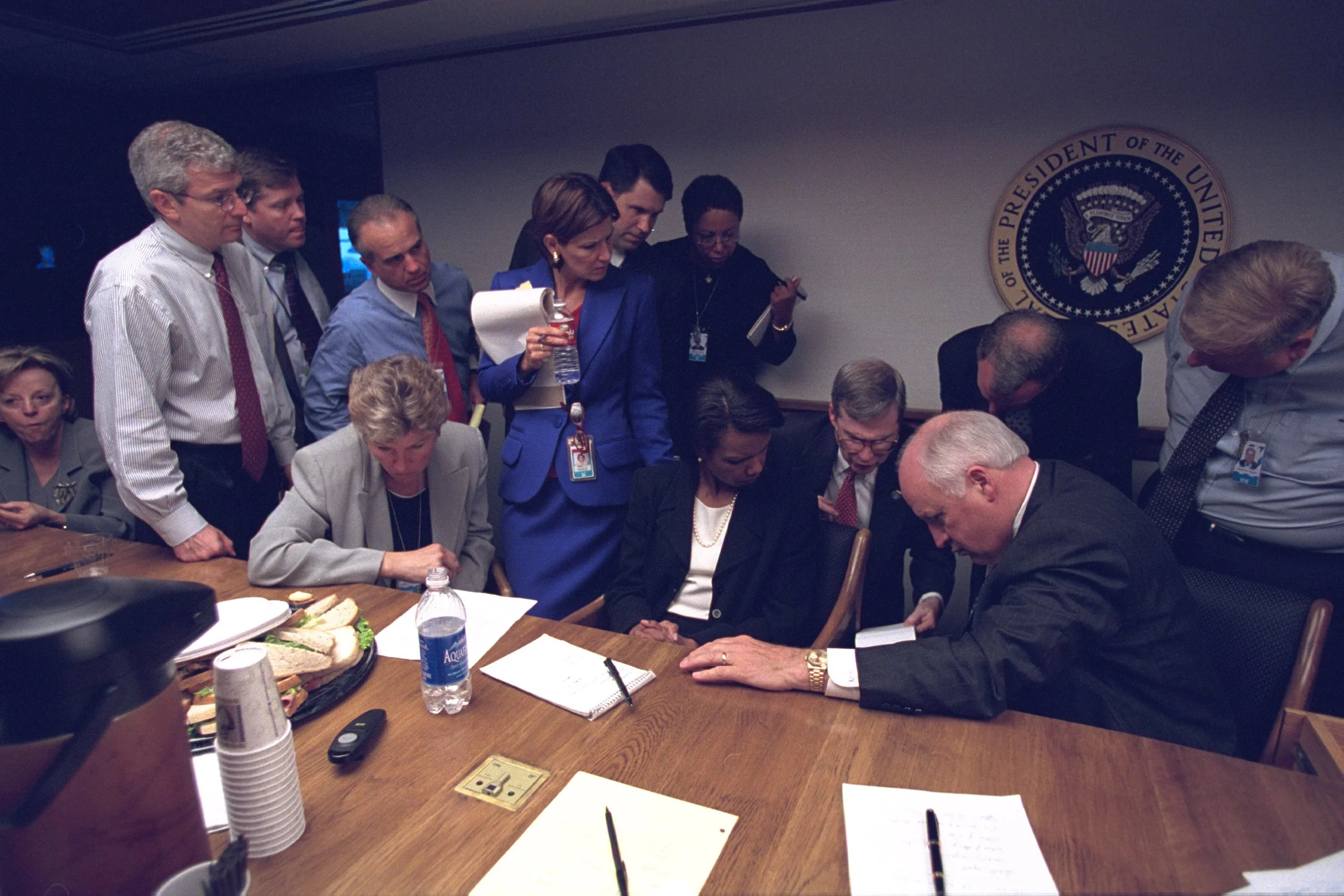
Vice President Cheney with Senior Staff in the President's Emergency Operations Center (PEOC). Image source here.
Context
Although the United States does not publicly disclose the nature and frequency of their training exercises, a fair number of those who have previously been involved have gone on record for what we may be able to expect from these. One could assume that during the Cold War the Pentagon and DoD would have spent many years preparing and perfecting drills and training for nuclear attacks. In reality however, Jimmy Carter in 1977 was the first president to do so. These were called “Ivory Item”. In these exercises President Jimmy Carter was put through a very similar scenario that the President in HoD was put through. Former Deputy National Security Advisor David Aaron in an email to the National Security Archive did provide some surprising details regarding the President’s familiarity with those involved. “I remember that it was a cacophony of voices and Carter saying how can I take advice from these people, if I don't even know who they are?”. Now, this was in the late 1970’s. We can rest easy knowing there have almost assuredly been changes to this drill. Yet another interesting detail I have come across in Raven Rock were that exercises were done where the President was not involved and there was a stand-in. in these drills no “President” ever ordered a strike before the first missiles had already impacted the U.S. and many “would never order a strike at all” (pg. 267).

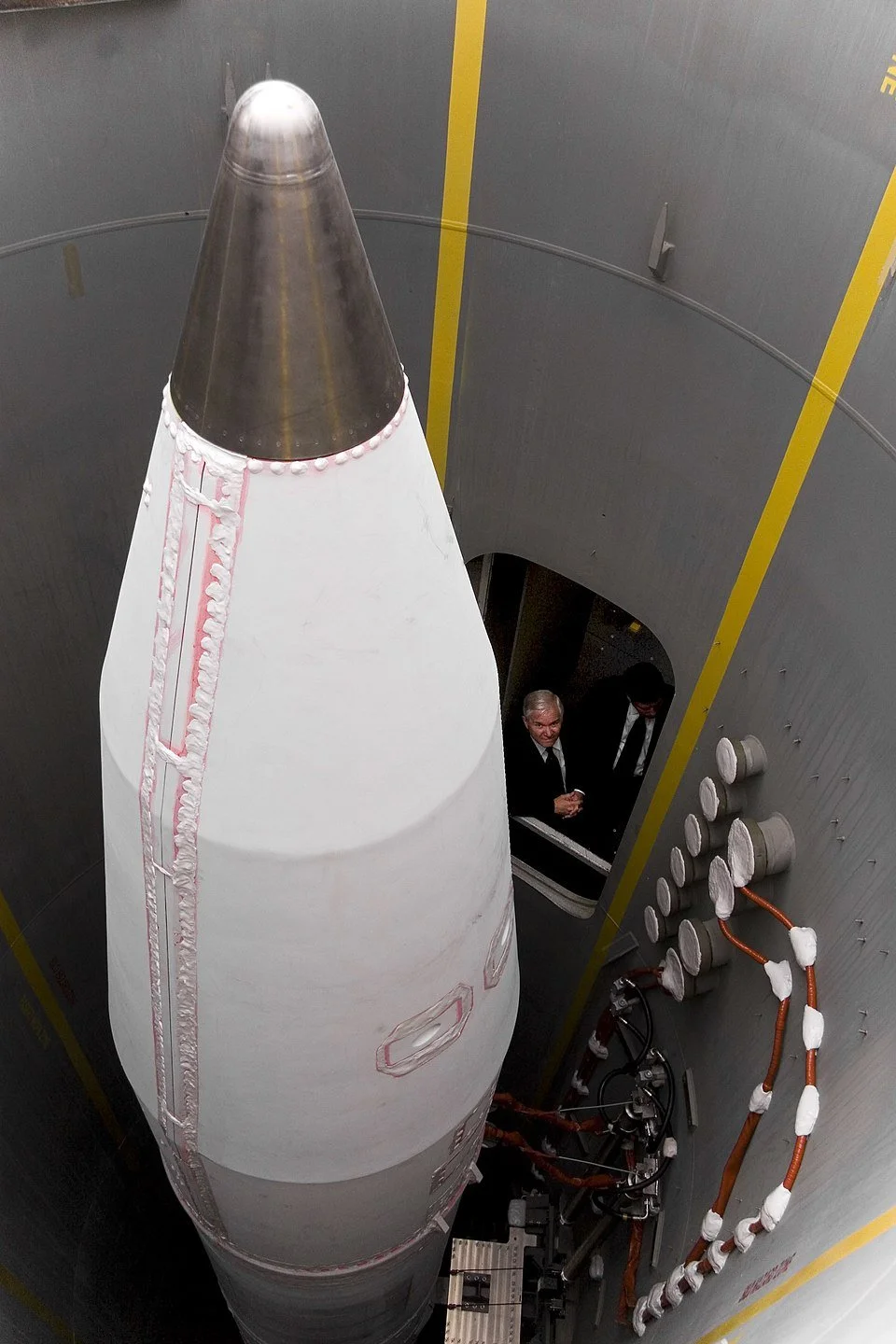
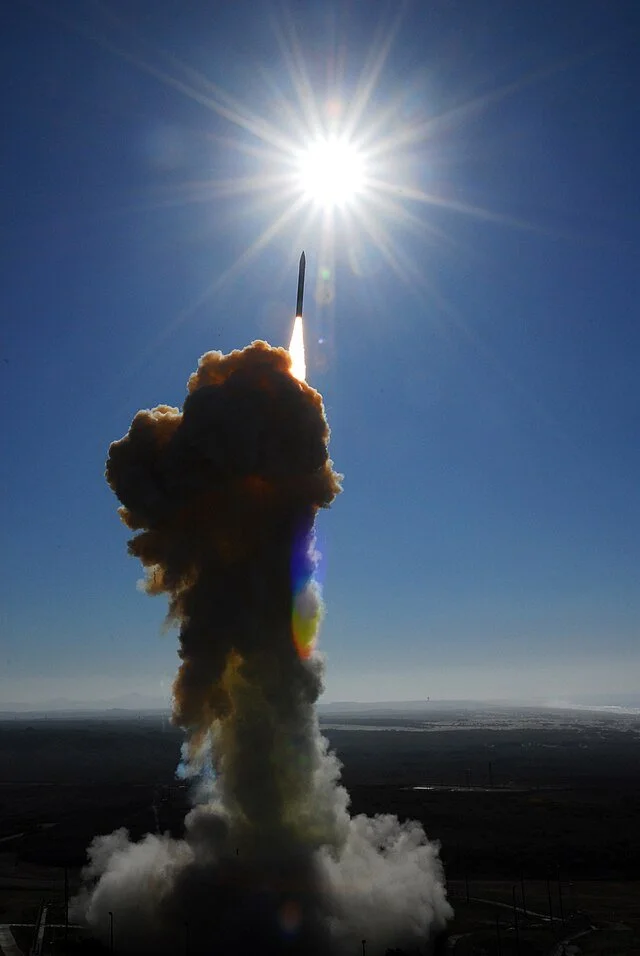
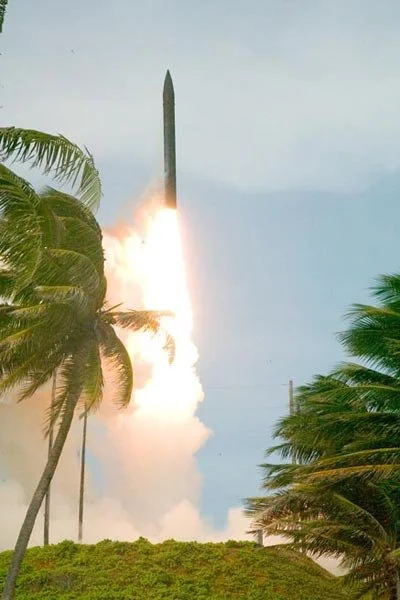
GBI transport and Silo Interface Vault at Fort Greely; test of the Ground-based Midcourse Defense element of the Ballistic Missile Defense System at Vandenberg Air Force Base; launch from Kwajalein Atoll in the Marshall Islands. (All sourced through Wikimedia commons.)
Up to interpretation
Amongst one of the most questioned parts of the movie was the interceptor scene with the GBIs (Ground Based Interceptors). Different experts from different backgrounds have all published different comments about this. Some said, yes, the USAF would have fired more interceptors; or, they would have launched interceptors from Vandenberg AFB not Alaska. Tom Karako from the Missile Defense Project and Senior Fellow at the Defense and Security Department went into greater detail with a CSIS talk about the movie. He refers to launching two or three interceptor missiles, each using a three-stage rocket, and discusses the success rate of the GBIs along with the system’s ability to fire again after assessing whether the first attempt successfully destroyed the incoming missile. I also got in touch with a a former engineer who was sceptical of the percentage kill / kill probability that was provided in the movie. That is, the claimed likelihood that the interceptor missiles would successfully destroy the incoming warhead. However, from a plot perspective if the GBIs were successful then the movie would not get very far, so one may need to forgive this interpretation.
House of Dynamite is by no means a totally unrealistic fantasy piece. However, the scenario and what the characters are doing are mismatched from how this potential event may play out. For the sake of the plot, things like missing the launch detection, the President not being given the full cabinet of advisors, and foreign governments being omitted, stir speculation over the potential perpetrator. While interesting for a movie, these weak points are exactly what the U.S. has trained and prepared for. The U.S. would not consider employing even a single nuclear weapon without a clear perpetrator and we certainly would not provide the president just three options for a response. These are obviously important to make the movie entertaining, but they are also conflicts that the U.S. nuclear command structure has worked very hard to avoid.